

Skin-to-skin contact
Skin-to-skin contact is a key part of the UNICEF UK Baby Friendly Initiative standards. It helps babies adjust to life outside the womb and supports mothers to initiate breastfeeding and develop close, loving relationships with their baby.
What is skin-to-skin contact?
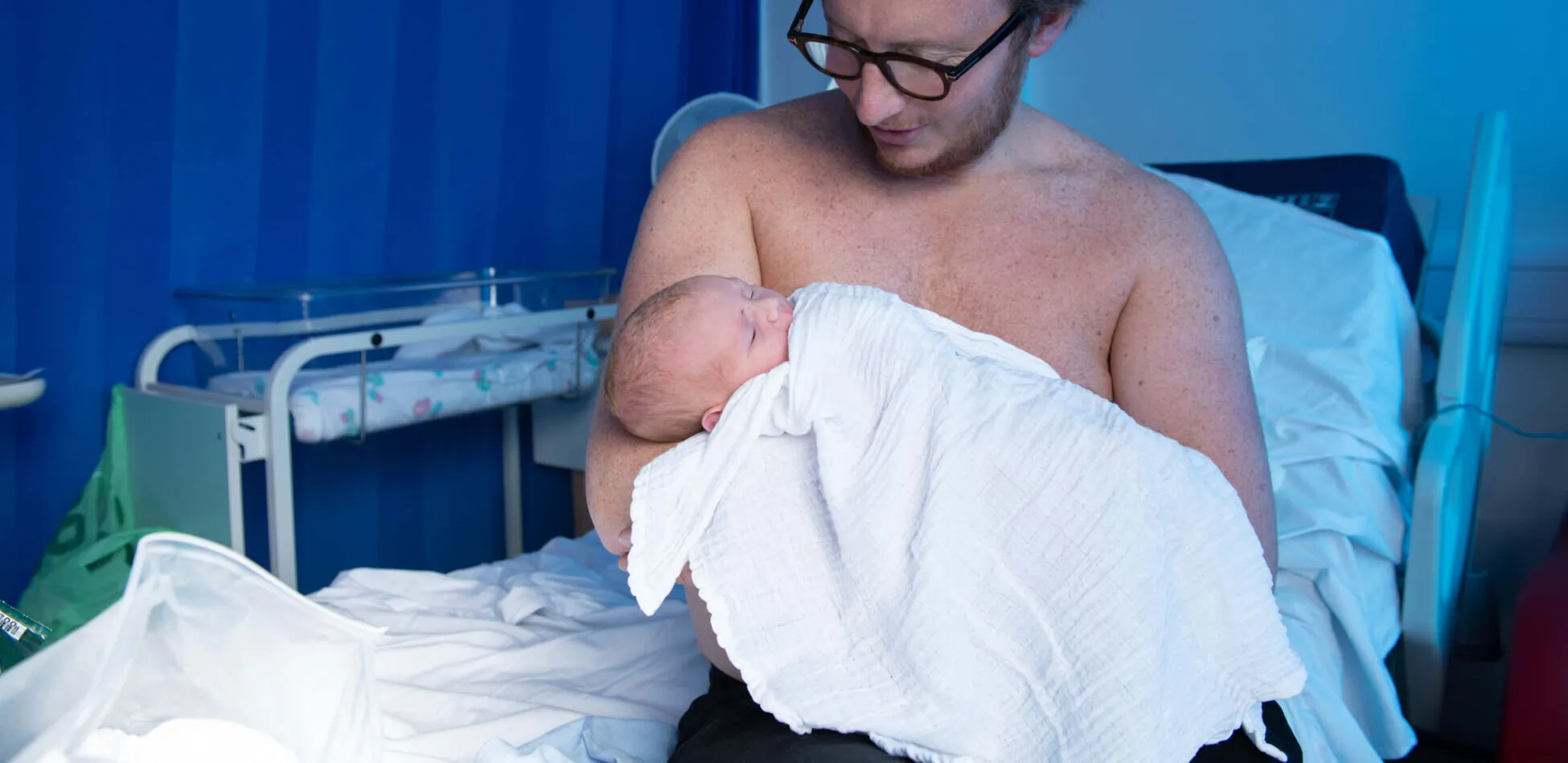
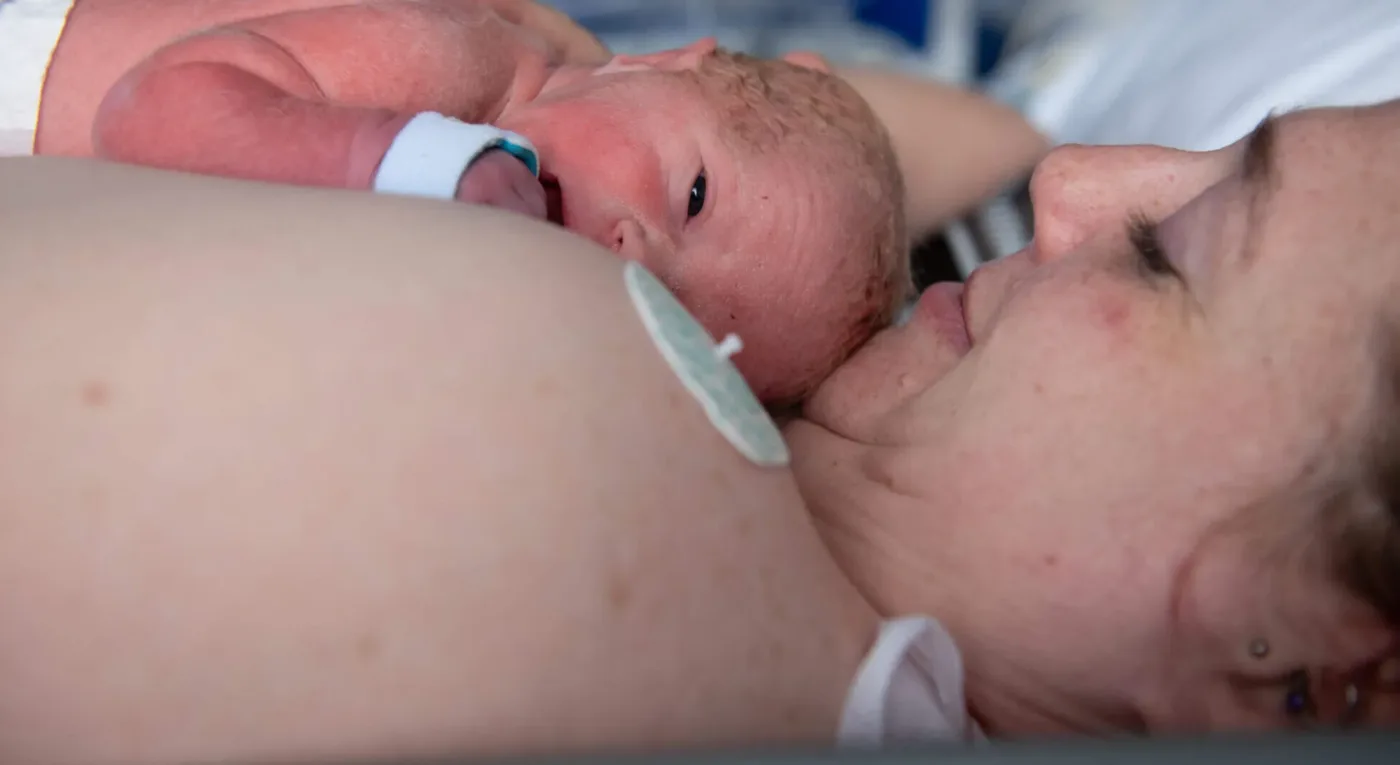
Skin-to-skin contact is usually referred to as the practice where a baby is dried and laid directly on the mother’s bare chest after birth, both of them covered in a warm blanket and left for at least an hour or until after the first feed. Skin-to-skin contact can also take place any time a baby needs comforting or calming and can help boost a mother’s milk supply. Skin-to-skin contact is vital in neonatal units where it is often known as ‘kangaroo care’. Here it helps parents bond with their baby and supports better physical and developmental outcomes for the baby.
Why is skin-to-skin contact important?
There is a growing body of evidence that skin-to-skin contact after the birth helps babies and their mothers. The practice:
- calms and relaxes both mother and baby
- regulates the baby’s heart rate and breathing, helping them to better adapt to life outside the womb
- stimulates digestion and an interest in feeding
- regulates temperature
- enables colonisation of the baby’s skin with the mother’s friendly bacteria, thus providing protection against infection
- stimulates the release of hormones to support breastfeeding and mothering.
Skin-to-skin contact also provides benefits for babies in the neonatal unit, in that it:
- improves oxygen saturation
- reduces cortisol (stress) levels, particularly following painful procedures
- encourages pre-feeding behaviour
- assists with growth
- may reduce hospital stay
- improves milk volume if the mother expresses following a period of skin-to-skin contact, with the expressed milk containing the most up-to-date antibodies.
What happens during skin-to-skin contact?
When a mother holds her baby in skin-to-skin contact after birth, it initiates strong instinctive behaviours in both. The mother will experience a surge of maternal hormones and begin to smell, stroke and engage with her baby. Babies’ instincts after birth will drive them to follow a unique process, which if left uninterrupted will result in them having a first breastfeed. If they are enabled to familiarise themselves with their mother’s breast and achieve self-attachment, it is very likely that they will recall this at subsequent feeds, resulting in fewer breastfeeding problems.
After birth, babies who are placed skin-to-skin on their mother’s chest will:
- briefly cry a very distinctive birth cry
- enter a stage of relaxation where they display very little movement as they recover from the birth
- start to wake up, opening their eyes and showing some response to their mother’s voice
- begin to make small movements of the arms, shoulders and head; as these movements increase, the baby will draw up their knees and appear to move or crawl towards the breast
- often rest once they have found the breast (this can often be mistaken as the baby not being hungry or not wanting to feed)
- begin to familiarise with the breast after a period of rest, perhaps by nuzzling, smelling and licking around the area (this familiarisation period can last for some time and is important, so should not be rushed; try to remain patient and allow the baby to work out how to best attach themselves)
- self-attach and begin to feed (it may be that mother and baby need a little help with positioning at this stage)
- come off the breast once they have had a chance to suckle for a period of time. Following this, often both mother and baby will fall asleep.
Most term healthy babies will follow this process, providing it is not interrupted by anything, for example taking the baby away to weigh or the mother going for a shower. Interrupting the process before the baby has completed this sequence or trying to hurry them through the stages may lead to problems at subsequent breastfeeds. If the mother has been given a lot of analgesia during labour, the baby may be drowsy and this process can take longer.
Skin-to-skin contact in the Baby Friendly standards
The Baby Friendly standards require that skin-to-skin contact is valued and supported in hospitals.
Maternity units are required to ensure that:
- all mothers have skin-to-skin contact with their baby after birth, at least until after the first feed and for as long as they wish
- all mothers are encouraged to offer the first feed in skin contact when the baby shows signs of readiness to feed
- mothers and babies who are unable to have skin contact immediately after birth are encouraged to commence skin contact as soon as they are able, whenever or wherever that may be.
Neonatal units are required to ensure that:
- parents have a conversation with an appropriate member of staff as soon as possible about the importance of touch, comfort and communication for their baby’s health and development
- parents are actively encouraged to provide comfort and emotional support for their baby, including prolonged skin contact, comforting touch and responsiveness to their baby’s behavioural cues
- mothers receive care that supports the transition to breastfeeding, including the use of skin-to-skin contact to encourage instinctive feeding behaviour.
Safety considerations
Vigilance of the baby’s well-being is a fundamental part of postnatal care immediately following and in the first few hours after birth. For this reason, normal observations of the baby’s temperature, breathing, colour and tone should continue throughout the period of skin-to-skin contact in the same way as would occur if the baby were in a cot (this includes calculation of the Apgar score at 1, 5 and 10 minutes following birth). Care should always be taken to ensure that the baby is kept warm. Observations should also be made of the mother, with prompt removal of the baby if the health of either gives rise to concern.
Staff should have a conversation with the mother and her companion about the importance of recognising changes in the baby’s colour or tone and the need to alert staff immediately if they are concerned.
It is important to ensure that the baby cannot fall on to the floor or become trapped in bedding or by the mother’s body. Mothers should be encouraged to be in a semi-recumbent position to hold and feed their baby. Particular care should be taken with the position of the baby, ensuring the head is supported so the infant’s airway does not become obstructed
Notes – Mothers
- Observations of the mother’s vital signs and level of consciousness should be continued throughout the period of skin-to-skin contact. Mothers may be very tired following birth and so may need constant support and supervision to observe changes in their baby’s condition or to reposition their baby when needed.
- Many mothers can continue to hold their baby in skin-to-skin contact during perineal suturing, providing they have adequate pain relief. However, a mother who is in pain may not be able to hold her baby safely. Babies should not be in skin-to-skin contact with their mothers when they are receiving Entonox or other analgesics that impact consciousness.
Notes – Babies
All babies should be routinely monitored whilst in skin-to-skin contact with mother or father. The following observations should be included.
- Checking that the baby’s position is such that a clear airway is maintained – observe respiratory rate and chest movement. Listen for unusual breathing sounds or absence of noise from the baby.
- Colour – the baby should be assessed by looking at the whole of the baby’s body, as the limbs can often be discoloured first. Subtle changes to colour indicate changes in the baby’s condition.
- Tone – the baby should have a good tone and not be limp or unresponsive.
- Temperature – ensure the baby is kept warm during skin contact.
Always listen to parents and respond immediately to any concerns raised