

Nutrition
A healthy start in life for every child
Why does child nutrition matter?
Child nutrition matters because it directly affects a child’s growth, brain development and ability to stay healthy. Nutrients like vitamins and minerals help build strong immune systems, support physical development and improve concentration and learning.
Children who get the nutrition they need are more likely to have the energy to play, learn and thrive as they grow.
Due to global inequalities, however, not every child has the same strong start. Children in the poorest and most marginalised communities are more likely to face food insecurity.
When food is scarce, parents may be forced to skip meals, sell the tools and livestock they need to make a living, or send their children to work. Nutrition is therefore not just a health issue, but an economic one that can deepen inequality and keep families trapped in a cycle of poverty.
Our Child Nutrition Report found that:
- Globally, one in four children under 5 years old lives in severe food poverty.
- Progress to end severe child food poverty is slow, but some countries are showing that it can be done with better nutrition support for children.
- Conflict and climate change are making severe child malnutrition much worse.
How UNICEF is helping improve nutrition for children
Every year, we aim to:
- Reach at least 300 million children under 5 with programmes that prevent stunting, wasting, micronutrient deficiencies, and obesity in early childhood.
- Support at least 100 million school-age children and adolescents through programmes that prevent anaemia, micronutrient deficiencies, and obesity.
Giving a child the best start in life

The first 1,000 days from conception are the most critical in a child’s life.
How does malnutrition affect children?
When children don’t get the food and nutrients they need as they grow up it can cause stunting. The most noticeable sign of stunting is that children are shorter than they should be for their age. They may also suffer irreversible damage to their bodies and brains, which affects their chance to have a healthy and happy life in the future. Stunting affected an estimated 23.2 per cent or 150.2 million children under 5 globally in 2024.
Wasting happens when a child suddenly stops getting enough appropriate food and, as a result, becomes very thin and frail. This can happen rapidly if a child becomes ill or in the event of a humanitarian crisis. When this acute malnutrition becomes severe, children are at high risk of dying. In 2024, Wasting continues to threaten the lives of an 42.8 million children under 5 globally.
It’s not just undernourishment that’s an issue. Getting too much of the wrong food, can cause children to become overweight, which has an effect on their health and happiness. Obesity can lead to serious health problems in later life, alongside low self-esteem and stigmatisation. An estimated 35.5 million children under 5 around the world are considered to be overweight as of 2024.
1 in 5
Globally, 1 in 5 deaths among children under age 5 is due to severe wasting, making it one of the top threats to child survival.
80%
UNICEF provides about 80% of the world's life-saving therapeutic food.
9.3 million
We reached 9.3 million with treatment for severe acute malnutrition in 2024.
Preventing child malnutrition
We’re working closely with communities and governments to prevent malnutrition and break the vicious cycle of poverty.
We are there for families right from the beginning. We support expectant mothers to have safe, healthy pregnancies, so that both mothers and their babies are well-nourished. Moreover, we support access to healthcare and essential micronutrients throughout childhood. By working with mothers in remote communities, we help build the knowledge and resources they need to improve child nutrition for generations to come.
Despite amazing progress, each year, we are still providing life-saving treatment to children facing severe malnutrition, especially in emergencies where conflict and disasters can push families into crisis. At the same time, we work to improve nutrition throughout children’s lives – helping improve their diets and strengthening the essential services families rely on, so that every child has the chance to grow and thrive.
Providing Nutrition to children in Emergencies
In emergencies, we reach and assess children with malnourishment so they can get the care they need to recover and stay healthy.
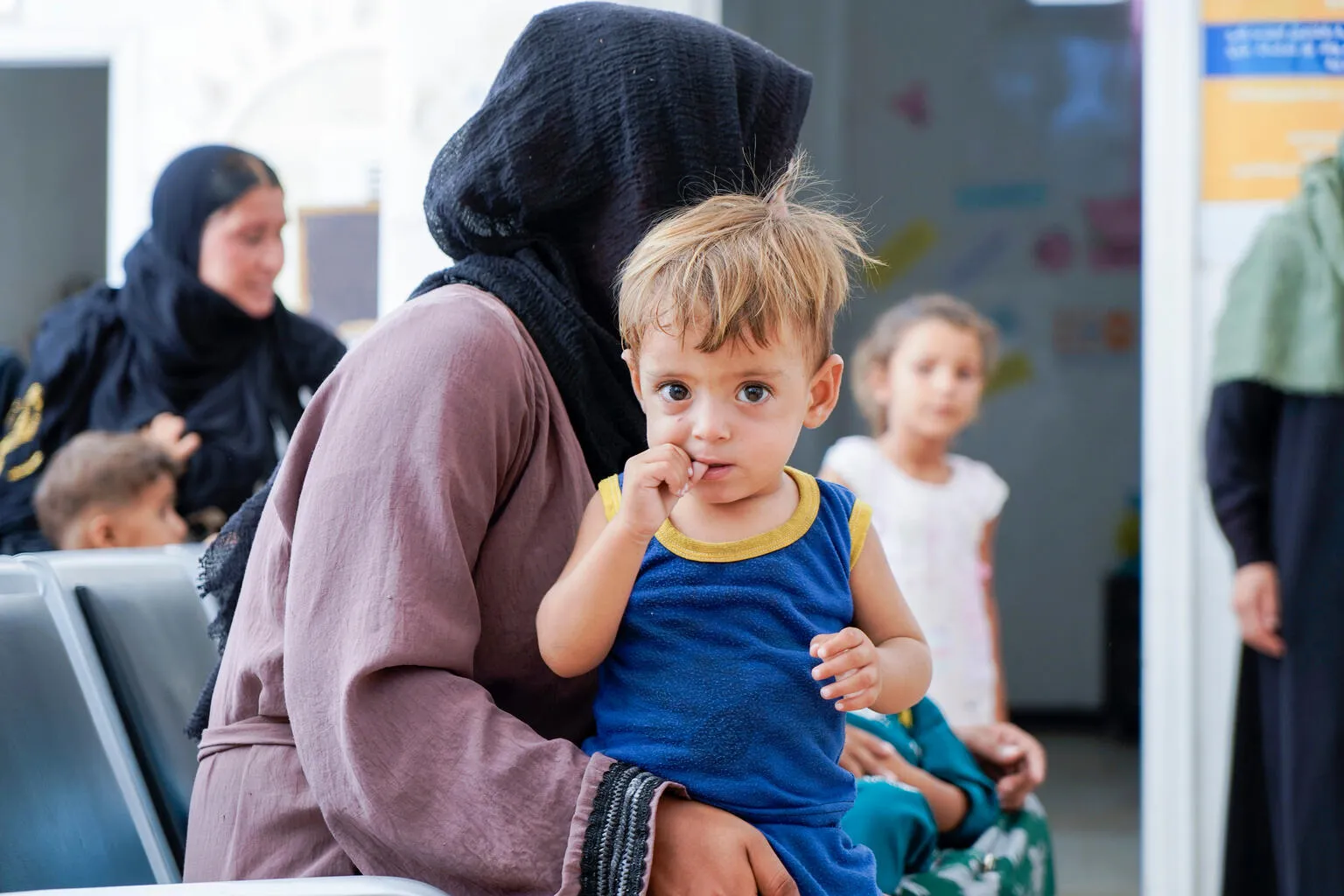
In Yemen, for example, our partners and dedicated community health care volunteers like Haifa (pictured) helped reach 9.3 million children with treatment for severe acute malnutrition in 2024.
Your donation helps ensure that children with malnutrition receive the life-saving therapeutic food that they need to survive and thrive.
For £10 a month, you can provide enough life-saving therapeutic food for a child for a week, giving them a real chance at survival.
What is life-saving therapeutic food?

We use specially formulated high-energy peanut paste enriched with key micro-nutrients that can be eaten straight from the packet to treat severely malnourished children.

It's cheap, easy to supply, and a course can bring a severely malnourished child back to health in just 4-6 weeks.