

Girls on the move:
education in a changing climate
UK Committee for UNICEF and APPG on Global Education Event
Girls on the Move: Education in a Changing Climate
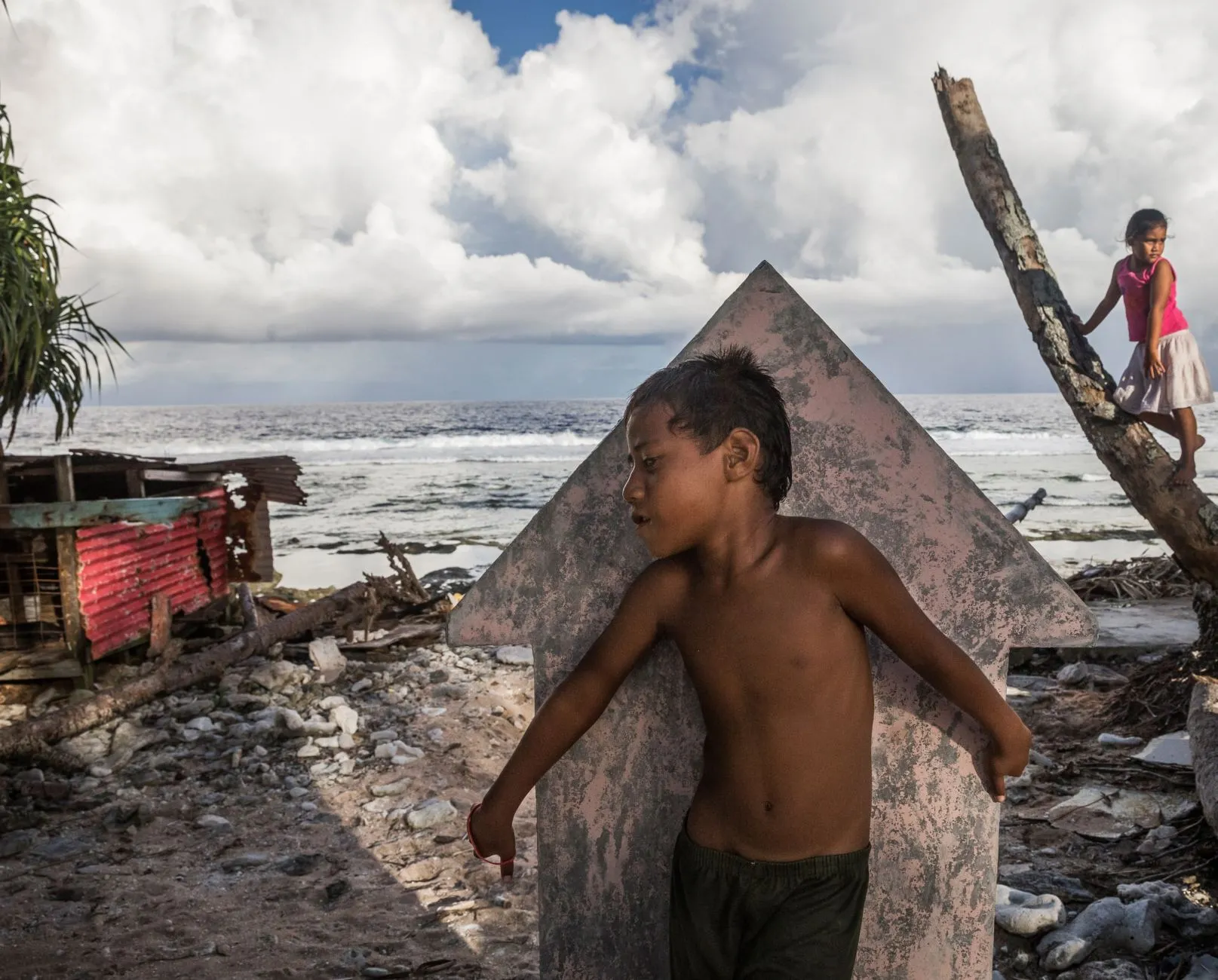
Children around the world are facing severe disruption to their education during Covid-19 – but this is unlikely to be the last interruption that many children face in their educational journey. As climate change continues to cause long-term changes and short-term disasters that uproot children and their families, the realisation of the right to education for many children will continue to be challenged.
Within this context, the UK Committee for UNICEF (UNICEF UK) and the All-Party Parliamentary Group (APPG) on Global Education held Girls on the Move: Education in a Changing Climate. The event explored the question Knowing that girls are disproportionately affected by both climate change and migration, how can the UK Government ensure all girls on the move due to climate change realise 12 years of quality education?
Chaired by Harriett Baldwin MP, Chair of the APPG on Global Education, the event began with a brief opening and introduction of the topic.
The audience then heard from Dr Saleemul Huq, Director of the International Centre for Climate Change and Development (ICCCAD) in Bangladesh. Saleem spoke on his work to tackle the impacts of climate change on vulnerable communities in South Asia and how they are putting the education and livelihoods of the most vulnerable – particularly women and girls – at risk. He also highlighted the importance of next year’s UK-hosted COP26 as a key moment for countries to demonstrate their ambition to control global temperature rises and limit the devastating effects of future climate shocks.
Education is being badly affected. It is the number one impact.
The next speaker was Faisal Nur Ali, a youth activist, social worker, and volunteer from Mogadishu, Somalia. Faisal grew up in war-torn Somalia and was displaced with his family several times during his childhood. Unlike many of his brothers and friends, Faisal was able to complete secondary school and carry on to university. At the event, Faisal spoke on the changing frequency and extremity of climate shocks in the Horn of Africa and how these impact on girls’ access to education, education infrastructure, nutrition, food security, and livelihoods.
He highlighted how entrenched gender inequalities mean that girls are often the first to be pulled out of education when climate shocks occur. Faisal described how climate-induced displacement causes extended disruption to education, including for girls, and how rural communities’ livelihoods are especially at risk. This, in turn, challenges families’ ability to afford school fees and uniforms. Faisal called on the UK Government to:
- Stop climate change undermining the right to education, and
- Meaningfully involve young people in the decisions that affect them.
The final speaker, Joanna Rea, Director of Advocacy at UNICEF UK, picked up on this important call to action. She focused on the UK’s role in placing girls’ education at the heart of the global conversation on climate change ahead of a key year for climate action in 2021. She warned of the threat that proposed cuts to the UK’s aid budget pose to the achievement of the UK’s commitment to girls’ education, emphasising the need to provide the necessary financing for both climate mitigation and education programming in 2021 and beyond.
Joanna also identified how both UK and global leadership at next year’s G7, COP26, and GPE funding conference will be key to tackling the twin threats of COVID-19 and climate change. She called for action now to mitigate the impact of climate-induced displacement on the achievement of the SDGs and girls’ access to education around the world. She noted that Unicef UK is urging the UK Government to:
- Recognise, highlight, and sound the alarm on the gendered and educational impacts of climate displacement.
- Work with countries, through its development work and with other G7 and donor countries, to bring together the right experts to build stronger education systems that are resilient to climate displacement.
- Use 2021 as a key year for action by connecting across sectors, championing education system strengthening, and highlighting resilience to climate displacement at the GPE, G7 and COP26 summits.
2021 is a huge opportunity for the UK to ensure that global partners really deliver for the world's children.
Questions from the audience, including Parliamentarians, offered an opportunity for speakers to further explore the challenge climate displacement poses to girls’ education.
From Faisal, the audience heard of the critical role education plays in girls’ empowerment, enabling them to adapt and build resilience to the impacts of climate displacement.
Saleem highlighted how the global community must recognise and anticipate displacement in order to prevent huge loss of learning and livelihoods. He cited work in Bangladesh to develop second cities, using educational opportunities as a way to support successful and sustainable climate migration.
Questions and discussion on the importance of youth engagement, informal education, climate resilience, and learning from Covid-19 closed the event.
Finally, the audience was reminded by Harriett Baldwin MP that we all need to work together to ensure 12 years of quality education for every child – especially those displaced by climate change.